


How to Pack Fragile Items Safely for Shipping: A Step-by-Step Guide

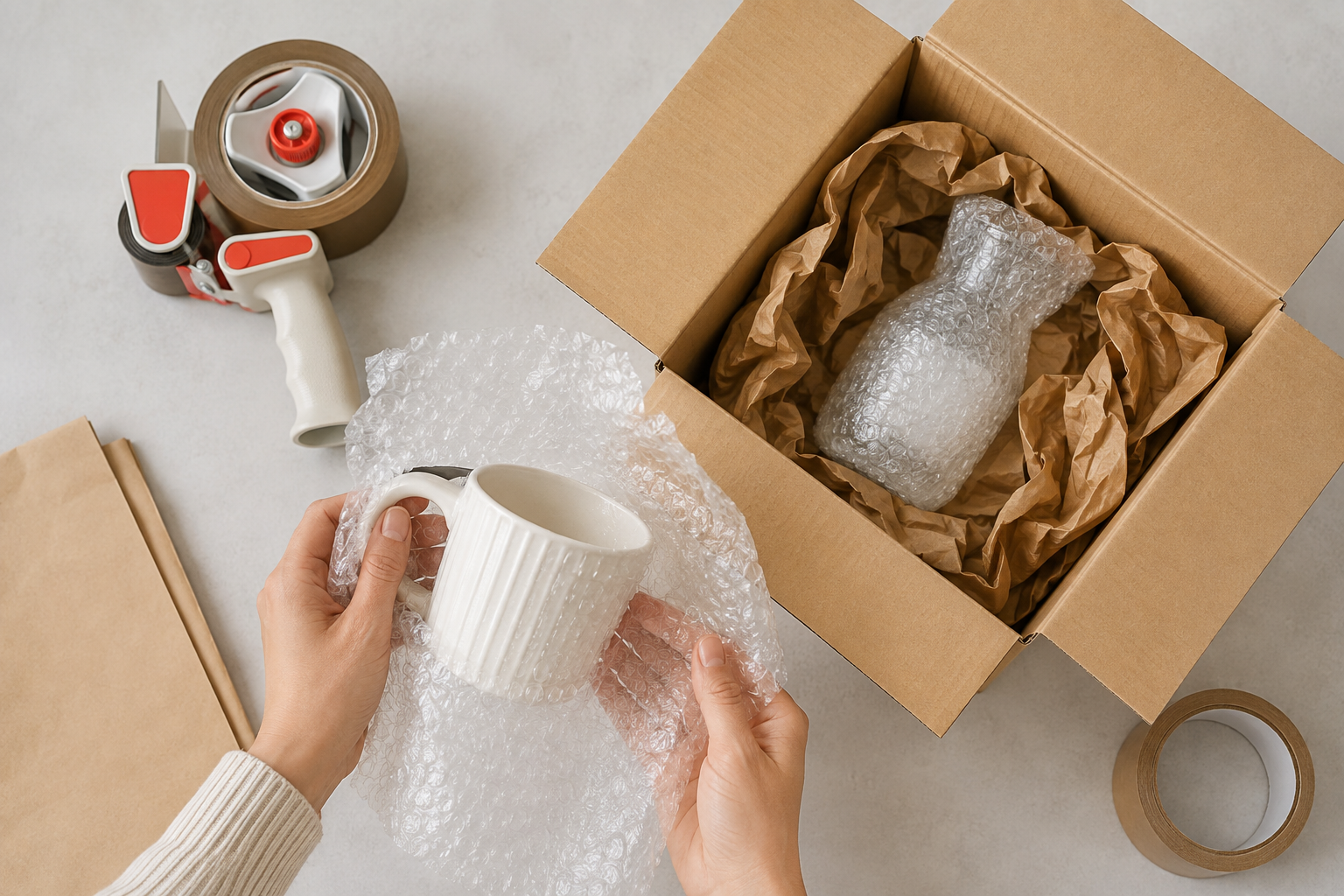
Whether you are sending glassware to a customer, posting a gift to a family member or shipping delicate products from your business, careful packaging is essential. Fragile items can be damaged by impact, pressure, vibration or movement inside the parcel, even when the outside of the box appears undamaged.
The good news is that most shipping damage can be prevented by choosing suitable packaging materials and following a consistent packing process. This guide explains how to pack fragile items safely for shipping, from selecting the right box to sealing and labelling the finished parcel.
Why Proper Packaging Matters
A parcel may be lifted, stacked, moved along conveyor systems and transported in several vehicles before reaching its destination. During this journey, it can experience sudden movement or pressure from other packages.
Good protective packaging performs three important jobs:
- It protects the item from direct impact.
- It prevents the contents from moving inside the box.
- It helps the outer package retain its shape under pressure.
Simply placing an item in a cardboard box is rarely enough. For reliable protection, the box, wrapping, cushioning and sealing method must work together.
What You Will Need
Before you begin, gather the right packaging supplies. The exact materials will depend on the size, weight and fragility of the item, but you may need:
- A strong single-wall or double-wall cardboard box
- Bubble wrap, foam sheets or another protective wrapping material
- Packing paper, air pillows, foam chips or other void fill
- Strong parcel or packing tape
- Cardboard dividers for multiple items
- Small polythene bags for loose parts or accessories
- A clear address label and, where appropriate, fragile handling labels
Always use packaging that is clean, dry and in good condition. A weakened box or low-quality tape can compromise an otherwise carefully packed parcel.
Step 1: Assess the Item Before Packing
Start by considering what could cause the item to break. Is it vulnerable to impact, scratching, bending, moisture or pressure? Does it contain small removable parts? Is one area, such as a handle, corner or screen, more delicate than the rest?
Remove any detachable components where possible and pack them separately. Secure lids, doors and moving parts so they cannot open during transport. Small screws, cables and accessories can be placed in labelled bags to prevent them from becoming lost or scratching the main item.
If you are shipping several fragile products in one parcel, treat each one as an individual item. They should never be able to knock against each other inside the box.
Step 2: Choose the Right Cardboard Box
Select a box that is slightly larger than the wrapped item, leaving enough space for protective cushioning on every side. A box that is too small will not provide adequate impact protection, while an excessively large box will require more void fill and may allow the contents to move.
For small, lightweight products, a good-quality single-wall box may be sufficient. Heavier, valuable or particularly delicate items usually benefit from a stronger double-wall cardboard box.
Avoid boxes with tears, crushed corners, water damage or weakened folds. If reusing a box, remove or completely cover old delivery labels and check that it still holds its shape.
For very delicate or valuable items, consider double boxing. Pack the protected item inside a smaller box, then place that box inside a larger one with cushioning between the two layers. This creates an additional barrier against impact and compression.
Step 3: Wrap Each Item Individually
Cover the entire item with a protective material such as bubble wrap or foam. Pay extra attention to corners, edges, handles and other exposed areas. The protective layer should stay securely in place without putting excessive pressure on delicate surfaces.
When using bubble wrap, position the bubbles towards the item so they can provide effective cushioning. Secure the wrapping with a small amount of tape, making sure the tape does not touch a surface that could be marked or damaged when it is removed.
Use additional layers for especially fragile items. Screens, polished surfaces and artwork may first need a soft, non-abrasive protective sheet before bubble wrap is added.
Step 4: Cushion the Bottom of the Box
Before placing the item inside, add a layer of cushioning to the bottom of the box. Packing paper, foam, air pillows or another suitable void-fill material can help absorb shock and prevent the item from resting directly against the cardboard.
Spread the material evenly and make sure the base does not flatten completely under the weight of the item. Heavy products may require denser cushioning than lightweight items.
Step 5: Position the Item in the Centre
Place the wrapped item in the centre of the box, away from the sides, corners, top and bottom. This space creates a protective buffer around the contents.
When packing multiple items, use cardboard dividers or sufficient cushioning to keep them separated. The products should not touch each other or the outer walls of the box. Place heavier items at the bottom and lighter items above them, provided this does not put pressure on delicate components.
Step 6: Fill Every Empty Space
Fill the gaps around the item with packing paper, air pillows, foam chips or another appropriate cushioning material. Pay attention to narrow spaces and corners where movement can still occur.
Once the box is filled, gently shake it. If you can hear or feel the contents moving, add more void fill and test it again. The item should remain securely in place without being packed so tightly that excessive pressure is created.
Do not rely on crumpled newspaper for delicate or valuable goods. It can compress during transit, may transfer ink and often provides less consistent protection than purpose-made packaging materials.
Step 7: Close and Seal the Box Securely
Close the flaps without forcing them down. If the box bulges or does not close naturally, use a larger box or adjust the packaging inside.
Seal the parcel with strong packing tape. Apply tape along the central opening and across both edges where the flaps meet the sides of the box, creating an H-shaped seal on the top and bottom. This helps prevent the flaps from opening during handling.
Avoid using masking tape, decorative tape or ordinary household adhesive tape, as these may not be strong enough for shipping conditions.
Step 8: Label the Parcel Clearly
Attach the delivery label to a flat, visible surface and make sure the barcode is not covered by tape, folded over an edge or placed across a seam. Remove or cover any old barcodes and address information.
A “Fragile” label can alert handlers to the nature of the contents, but it should only be treated as an additional precaution. It cannot replace appropriate wrapping, cushioning and a strong outer box.
If the parcel must remain upright, use orientation labels on more than one side. For valuable shipments, consider using a tracked or insured delivery service that is suitable for the item being sent.
Packing Advice for Different Fragile Items
Glassware and Ceramics
Wrap each piece separately and add extra protection around rims, stems, handles and corners. Fill hollow items with packing paper to improve support, but do not overfill them. Use dividers when several glasses, mugs or plates are packed together.
Electronics
Remove batteries where appropriate, secure cables and protect screens from scratches before adding cushioning. Use anti-static packaging for sensitive electronic components. Electronics should also be protected from moisture and should not move inside the parcel.
Bottles and Liquids
Check that every cap or lid is tightly closed and sealed. Place each container in a leak-resistant bag before wrapping it, then keep bottles separated with dividers or cushioning. Always confirm that the chosen courier accepts the liquid you intend to send.
Pictures and Framed Artwork
Protect the surface with a non-abrasive layer and reinforce vulnerable corners. Use a box designed for the dimensions of the frame where possible. Large or valuable artwork may require specialist packaging and delivery.
Common Fragile-Packing Mistakes to Avoid
Even good packaging materials can fail when they are used incorrectly. Common mistakes include:
- Choosing a box that is too large or too small
- Leaving empty space around the item
- Packing several products without wrapping them individually
- Allowing fragile items to touch the sides of the box
- Using a damaged or weakened cardboard box
- Applying too little packing tape
- Assuming a fragile label will prevent damage
- Using soft cushioning that collapses under a heavy product
A quick movement test before sealing the parcel can identify many of these problems.
Frequently Asked Questions
How much cushioning should I use for a fragile item?
Use enough cushioning to keep the item away from every outer wall and prevent all movement inside the box. The required amount depends on the product’s weight, shape and fragility. If the contents move when the box is gently shaken, more protection is needed.
Is bubble wrap enough for shipping fragile items?
Bubble wrap protects the surface and helps absorb impact, but it is only one part of the packaging system. You will also need a strong outer box, suitable void fill and secure packing tape.
Should I use a single-wall or double-wall box?
Single-wall boxes can be suitable for lighter, less delicate products. Double-wall boxes offer greater strength and are generally a better choice for heavy, valuable or highly fragile items.
Can I reuse a cardboard box?
Yes, provided it is clean, dry and structurally sound. Do not reuse a box with crushed corners, tears, moisture damage or weakened seams. Remove or cover all previous labels and barcodes before shipping.
Should I write “Fragile” on the parcel?
Adding a fragile label can be useful, but the parcel must still be packed to withstand normal transport and handling. A label should never be the main form of protection.
Choose Packaging Supplies You Can Rely On
Knowing how to pack fragile items correctly can reduce damage, returns and unnecessary replacement costs. Start with a box that suits the item, wrap every product individually, fill all empty spaces and seal the parcel with strong packing tape.
Whether you are preparing an occasional parcel or managing regular business shipments, reliable packaging supplies make the process safer and more consistent. Explore our range of cardboard boxes, protective packaging, packing tape and postal supplies to find everything you need for secure shipping.