


Single Wall vs Double Wall Boxes Explained

Choosing the right cardboard box is essential for protecting products during storage, shipping, and transportation. One of the most common questions businesses and online retailers ask is whether they should use single wall or double wall cardboard boxes.
While both types are widely used across various industries, each serves a different purpose. Understanding the differences can help you reduce shipping damage, improve customer satisfaction, and avoid unnecessary packaging costs.
In this guide, we’ll explain the key differences between single wall and double wall boxes and help you determine which option is best for your needs.
What Is a Single Wall Box?
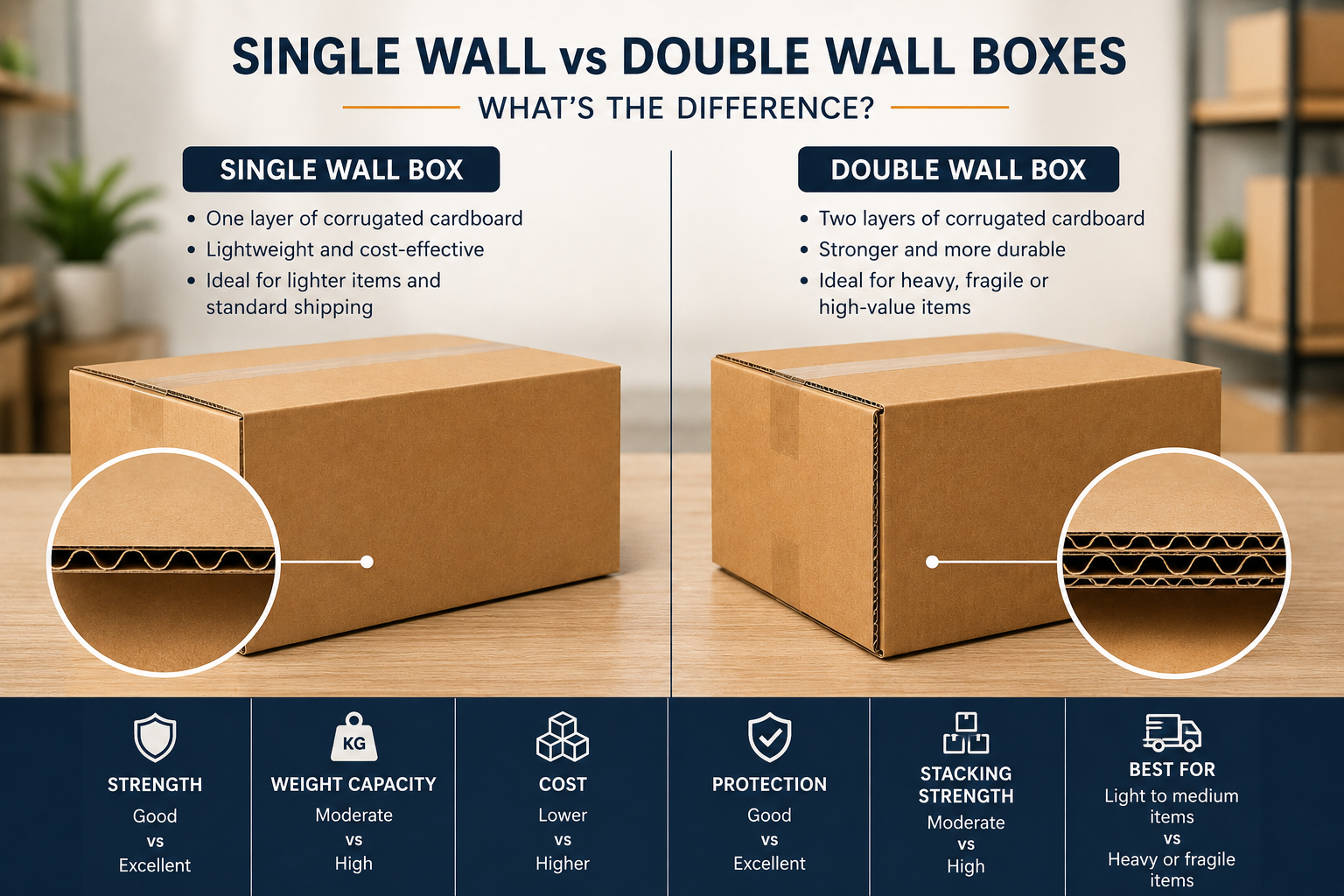
A single wall cardboard box consists of one layer of corrugated cardboard positioned between two flat liner boards.
This construction creates a lightweight yet durable packaging solution suitable for many everyday shipping and storage applications.
Advantages of Single Wall Boxes
Cost-Effective
Single wall boxes are generally less expensive than double wall alternatives, making them ideal for businesses shipping large volumes of products.
Lightweight
Because they contain less material, single wall boxes help reduce overall shipping weight and transportation costs.
Easy to Store
Their lighter construction makes them easier to handle, stack, and store in warehouses or offices.
Suitable for Most Everyday Products
Single wall boxes provide adequate protection for many common items, especially those that are not excessively heavy or fragile.
Common Uses
- Clothing and apparel
- Books
- Office supplies
- Lightweight electronics
- Subscription boxes
- E-commerce orders
What Is a Double Wall Box?
A double wall cardboard box contains two layers of corrugated cardboard separated by three liner boards.
This additional structure significantly increases strength, durability, and resistance to crushing.
Double wall boxes are designed for heavier products and situations where extra protection is required during transport.
Advantages of Double Wall Boxes
Superior Strength
Double wall boxes can support substantially more weight than single wall boxes.
Better Protection
The additional layer helps absorb impacts and reduces the risk of damage during shipping.
Improved Stacking Performance
Double wall boxes are better suited for warehouse environments where boxes may be stacked for extended periods.
Greater Durability
They perform better during long-distance transportation and repeated handling.
Common Uses
- Industrial products
- Automotive parts
- Heavy tools
- Glass products
- Electronics
- Bulk shipments
- Export packaging
Single Wall vs Double Wall Boxes Comparison
| Feature | Single Wall Box | Double Wall Box |
|---|---|---|
| Strength | Good | Excellent |
| Weight Capacity | Moderate | High |
| Cost | Lower | Higher |
| Shipping Protection | Good | Excellent |
| Stacking Strength | Moderate | High |
| Suitable for Heavy Items | Limited | Yes |
| Suitable for Export Shipping | Sometimes | Recommended |
| Storage Durability | Good | Excellent |
Which Box Is Better for E-Commerce?
For most online retailers, single wall boxes are sufficient for everyday shipments.
Products such as:
- Clothing
- Small household items
- Books
- Accessories
- Beauty products
can usually be shipped safely in a quality single wall box.
However, if the product is:
- Fragile
- Heavy
- High-value
- Shipped internationally
a double wall box is often the safer choice.
When Should You Choose a Single Wall Box?
Single wall boxes are recommended when:
- The contents are lightweight.
- Shipping costs need to be minimised.
- Products already have protective retail packaging.
- Items are unlikely to experience heavy impacts.
Many small businesses and e-commerce stores use single wall boxes as their standard packaging solution due to their affordability and versatility.
When Should You Choose a Double Wall Box?
Double wall boxes are recommended when:
- Products are heavy.
- Extra protection is required.
- Items are fragile or valuable.
- Goods are being shipped internationally.
- Boxes will be stacked in storage.
- Long-distance transportation is involved.
Although they cost slightly more, double wall boxes can help prevent costly product damage and returns.
Are Double Wall Boxes Worth the Extra Cost?
In many cases, yes.
The cost of replacing damaged goods, handling customer complaints, and processing returns can quickly exceed the small additional cost of stronger packaging.
Businesses shipping delicate or expensive products often find that double wall boxes provide a worthwhile return on investment through reduced damage rates.
How to Identify Single and Double Wall Boxes
A simple way to identify the difference is by looking at the cut edge of the cardboard.
Single Wall
You will see:
- One corrugated layer
- Two outer liner boards
Double Wall
You will see:
- Two corrugated layers
- Three liner boards
The additional corrugated layer is what provides the increased strength and durability.
Choosing the Right Box for Your Business
The best choice depends on the type of products you ship and the level of protection required.
For everyday e-commerce orders, single wall boxes often provide the perfect balance between protection and affordability.
For heavier, fragile, or high-value items, double wall boxes offer superior strength and peace of mind during transit.
Many businesses use a combination of both types to optimise packaging costs while ensuring products arrive safely.
Conclusion
Both single wall and double wall cardboard boxes have their place in modern packaging.
Single wall boxes are lightweight, cost-effective, and suitable for most everyday shipments. Double wall boxes provide enhanced strength, durability, and protection for heavier or more valuable goods.
By selecting the correct box type for each shipment, businesses can reduce damage, lower return rates, and improve customer satisfaction while maintaining efficient shipping operations.